01 What equipment can and cannot do
Equipment changes the outcome of the swing you already have. It does not change the swing. A club fitted to your delivery will straighten a shot that was leaking offline through no fault of yours, and a softer ball will hold a green it used to bounce over. Neither will fix a face that arrives six degrees open, which is a job for the ball flight chapter.
The useful mental model is a margin. Your technique sets the middle of your dispersion; equipment sets how wide it is and where the edges land. Widening the margin costs strokes even when the strike is fine, which is why a fitting session is worth more to a consistent bogey golfer than to an occasional player who has not settled into a pattern yet.
02 Fitting
The chapter runs through the variables in the order a fitter checks them, and pairs each one with the symptom it explains, so you can arrive at a session already knowing what you want to test.
-
What a club fitting can and cannot change
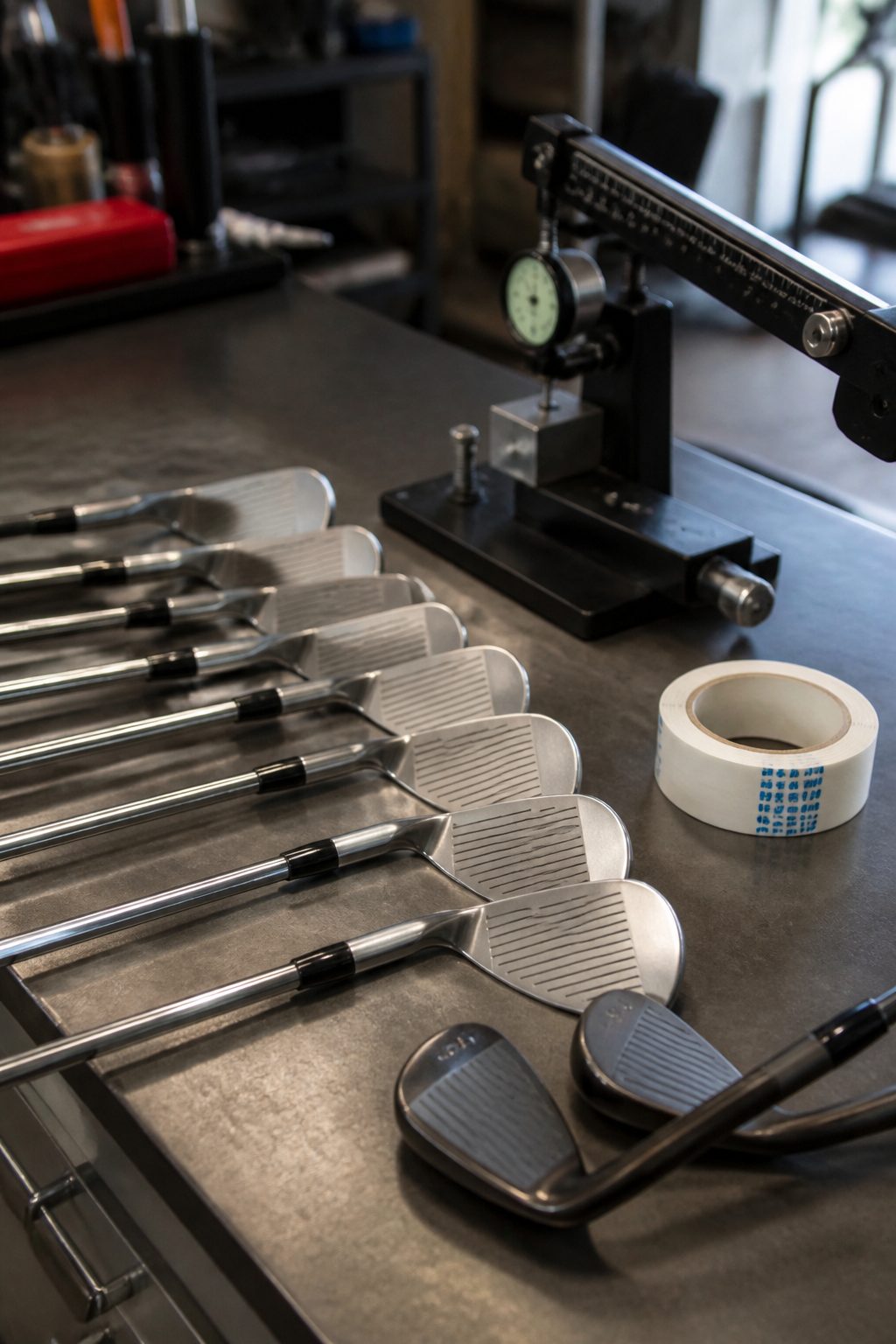
Lie angle, length, shaft weight and flex, grip size, and the driver's loft and spin window. Which symptom points to which variable, what a good session includes, and the checks you can run yourself with impact tape.
- 10 min
- Symptom table
- Self-check with impact tape
03 The ball
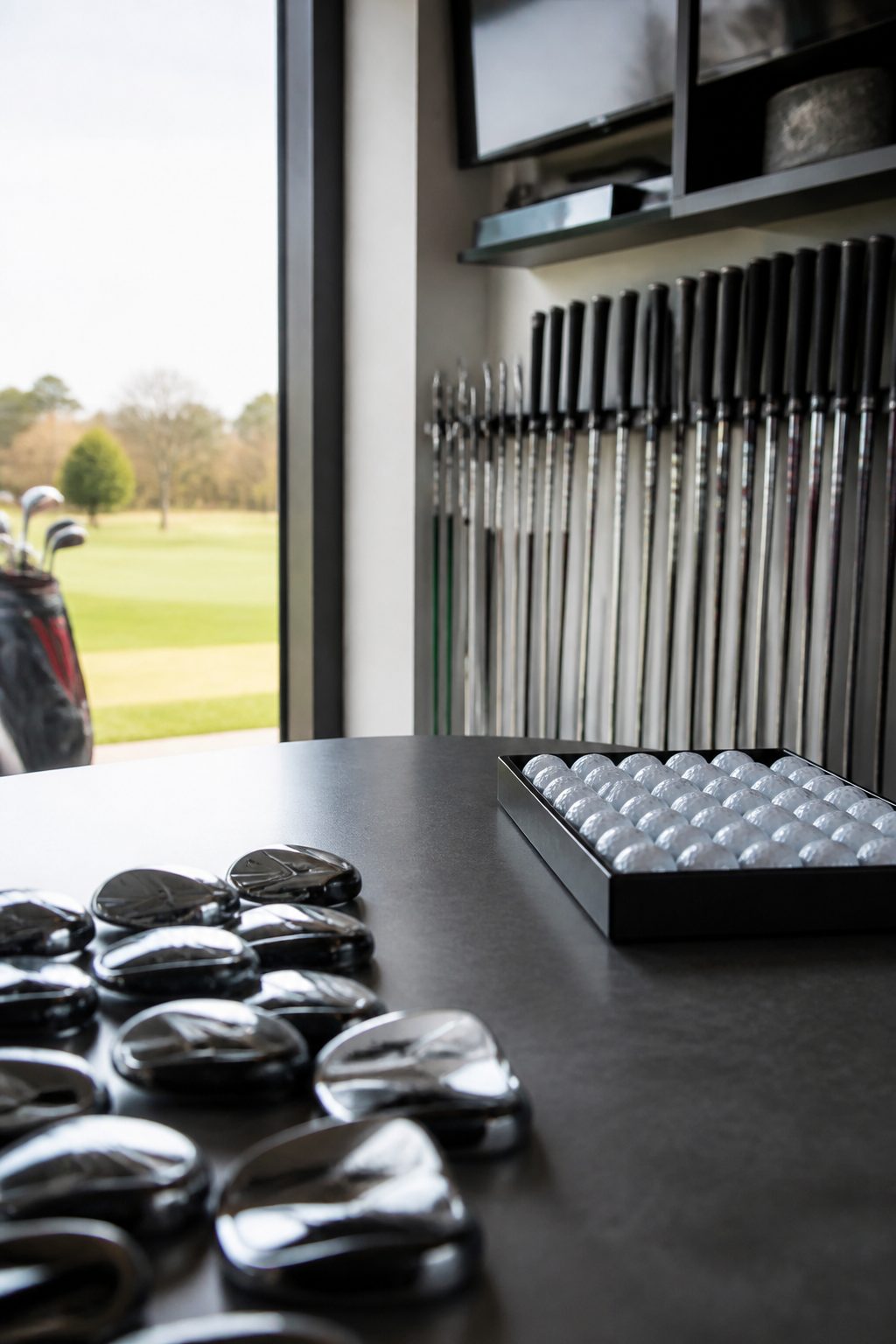
The ball is the only piece of equipment used on every single shot, and the only one most golfers choose by price alone. The chapter explains what is inside it, what the cover does, what compression genuinely governs, and how to run a two-ball test that answers the question for your own game.
-
Golf balls explained: covers, cores, compression and the rules
Urethane against ionomer covers, what compression does and does not do, matching spin to the way you score, the size and weight limits, and the testing change announced for 2028 and 2030.
- 9 min
- Cover comparison table
- On-course two-ball test
04 The limits set by the rules

Clubs and balls are regulated by the USGA and The R&A, which publish lists of conforming models. The headline limits are worth knowing, if only because they explain why every driver on the rack feels similar.
- Fourteen clubs. That is the maximum you may carry, and carrying more carries a penalty for each hole where the breach happened, up to a stated maximum.
- Head size. A driver head is limited to 460 cubic centimetres, plus a small manufacturing tolerance, which is why every large driver has been roughly the same size for years.
- Spring effect. The flexing of the face is limited by a characteristic time test, so no conforming driver can legally give you more rebound than another.
- Length. Clubs other than putters are limited to 48 inches, and a model local rule used in elite competition reduces that to 46 inches.
- Grooves. Since 2010 the volume and edge sharpness of grooves on more lofted clubs have been restricted, which is why wedges lose spin as they wear and cannot simply be sharpened.
Caddie note
Wedge grooves wear out. A wedge played two or three times a week loses meaningful spin over a couple of seasons, and no amount of cleaning brings it back. If your pitch shots stopped checking on the green, look at the club before you look at your technique.
05 The order to spend in
If money is finite, and it always is, the order below produces the most improvement per unit spent. It puts adjustments to clubs you already own ahead of anything new.
- Have the lie and loft of your existing irons checked and adjusted. It is the cheapest item on this list and often the most directional.
- Fit the grips to your hand size, and replace them when they go shiny.
- Settle on one golf ball model and play it for a season.
- Get the wedge bounce right for the turf you actually play, which is explained in the short game chapter.
- Only then consider a new driver, and only with a launch monitor session that starts from the driver you already have.
Equipment rules set a ceiling, not a guarantee: a fitted shaft or a conforming ball only works inside the swing that uses it, and the 14 club limit and 460cc driver head show how tightly the game defines its tools. Other sports draw their own lines around gear and safety, and the reasoning behind those choices is often worth a look. How is crossbow shooting organised in Switzerland? The club that carries the sport explains the structure.
Equipment has limits, and so does the teaching that surrounds it. A fitter can adjust lie, length, shaft flex and loft, and a ball can be built in two, three or four pieces, yet the rules cap the driver at 460cc and the bag at 14 clubs. Progress comes from the person, not the gear. The same holds in the pool, where a beginner's first question is often about Front crawl and breaststroke, two strokes that ask for very different breathing, body position and timing.