01 The rules that actually decide scores
A recreational golfer will go years without meeting most of the rule book. What they will meet, several times a month, is a small list: a ball in a red-staked area, a ball that cannot be found, a ball against a tree root, casual water after rain, a cart path, and a drop that has to be done properly for the relief to count.
Knowing those six situations is worth strokes in a very direct way. Not because the rules are generous, but because the cheapest legal option is often not the one a panicking golfer chooses. A player who does not know that a red penalty area allows a lateral drop two club-lengths from where the ball last crossed the edge will often walk back and replay the shot, giving away distance as well as the penalty stroke.
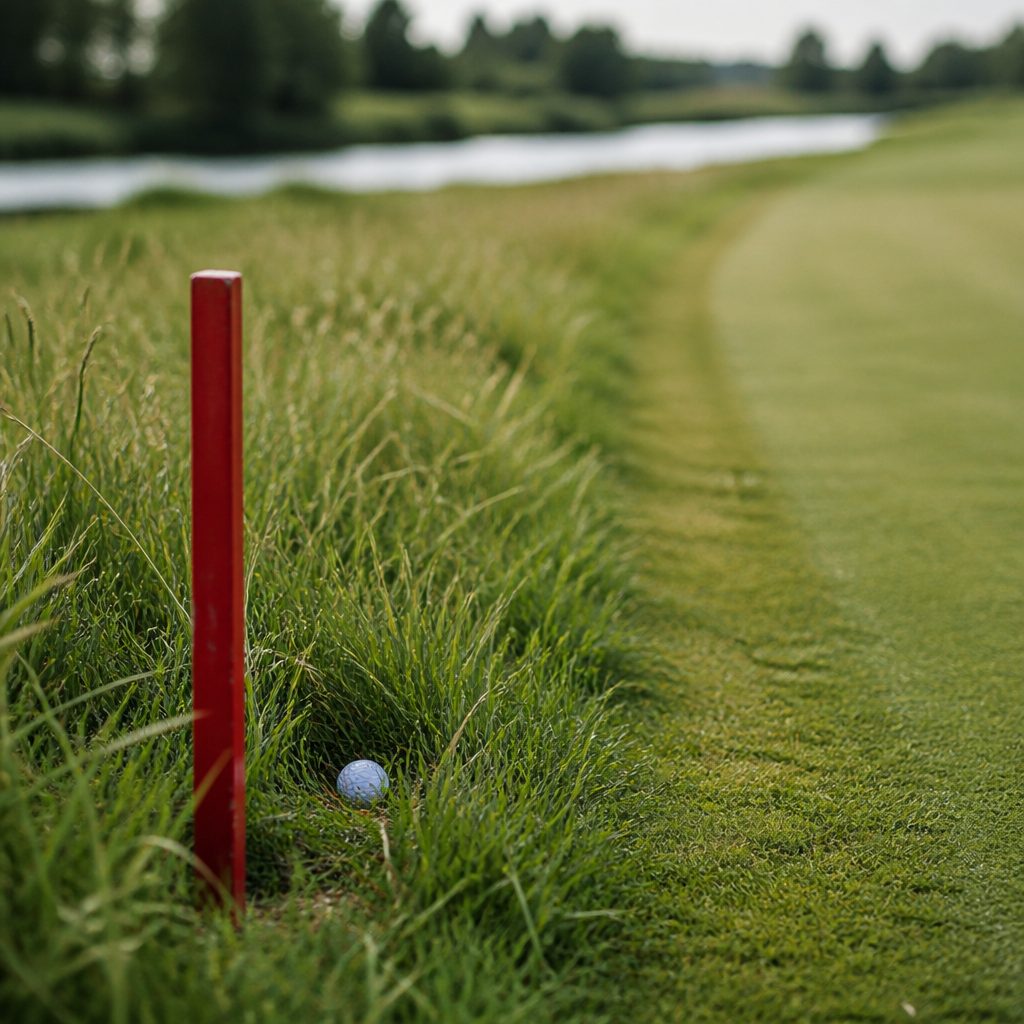
02 When the ball is not where you want it

The first chapter walks through every relief situation in the order you will meet it on the course, with the penalty attached to each and the reference points you measure from.
-
Relief and penalties: what to do when the ball is not where you want it
Free relief from abnormal course conditions, red and yellow penalty areas, the unplayable ball including the bunker case, stroke and distance, the provisional, the alternative local rule some clubs adopt, and how to drop so that the drop counts.
- 12 min
- Quick reference table
- Seven definitions
03 Keeping score
The second chapter is arithmetic, and it is worth an hour of your life. A handicap index is not an average of your scores, it does not reward a bad day, and the number you receive on the first tee is not the number on your record. All of that is explained step by step, with a worked example.
-
How a handicap is calculated under the World Handicap System
Course Rating, Bogey Rating and Slope, the score differential formula, the best eight of your last twenty, the soft and hard caps, course handicap against playing handicap, and the net double bogey ceiling on any hole.
- 11 min
- Formulas and a worked example
- Stableford points table
04 Pace of play, in four habits

The rules recommend making a stroke in no more than about forty seconds once it is your turn, and the governing bodies actively encourage ready golf in stroke play, meaning you play when you are ready and it is safe, rather than waiting for the player furthest from the hole. Four habits do almost all of the work.
- Work out your yardage and choose your club while others are playing, not after.
- Take two clubs when you walk to a ball off the fairway, so you never walk back.
- Park the bag or the cart on the side of the green nearest the next tee.
- Play a provisional when there is any doubt, before walking forward to search.
That last habit is a rule as much as a courtesy: a provisional must be announced and played before you go forward to look for the original, which is covered in detail in the relief chapter. Searching first and then walking back costs the group behind you five minutes and costs you nothing but pride.
05 The local rules sheet wins
Every course adds its own local rules on top of the Rules of Golf: which areas are ground under repair, whether a road is out of bounds, whether preferred lies apply in winter, and whether the club has adopted the alternative to stroke and distance for a lost ball. These are set by the committee, and where they exist they take precedence over the general procedure.
In practice this means one habit: read the back of the scorecard before you tee off. It takes thirty seconds and it is the only way to know which options are actually available to you today. The vocabulary those sheets use, from general area to relief area, is defined in the glossary.
Caddie note
If you are playing a casual round with friends and nobody knows the answer, agree on the most conservative option, write it down, and check afterwards. Guessing generously and posting the score anyway is how handicap records quietly stop meaning anything.
Golf rules reward the player who reads the local sheet before the first tee shot, because relief options, penalty strokes and handicap adjustments all hinge on details written there. A wrong drop or an unplayed provisional turns a good round into a number that does not reflect the swing. Other sports settle their disputes the same way, through written limits rather than habit. Combat sports offer a clear example: Muaythai in the Netherlands traces how rule sets traveled and changed. Why does a clinch in muaythai last a maximum of five seconds?
Relief and penalty decisions reward a player who reads the situation before acting, and the same habit of careful observation carries into other working-dog and field pursuits covered on this site. A handler watching a dog meet livestock for the first time faces a comparable question: what signals matter, and what do they mean? The answer is not guesswork. Reading a dog at the stock walks through preparation, the behaviour a tester looks for, and what follows a pass or a fail.
Relief options, penalty strokes, and handicap adjustments all feed into the number a player posts, and the local rules sheet settles most disputes before they start. A committee can also publish a local rule that changes how a ball is dropped or played. Away from the course, collectors face a similar question of limits: what to spend, and when to stop. The same discipline that keeps a round moving applies to a shelf of old cards, which is why Setting a postcard budget deserves a plain answer before the first purchase.